What are you looking for?


PVC Semirrígido
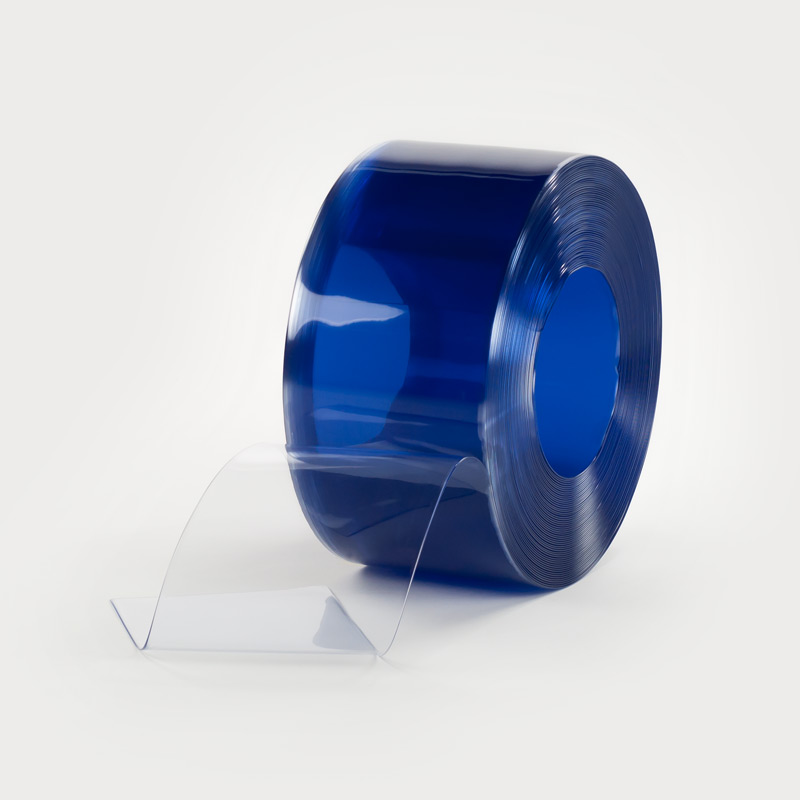
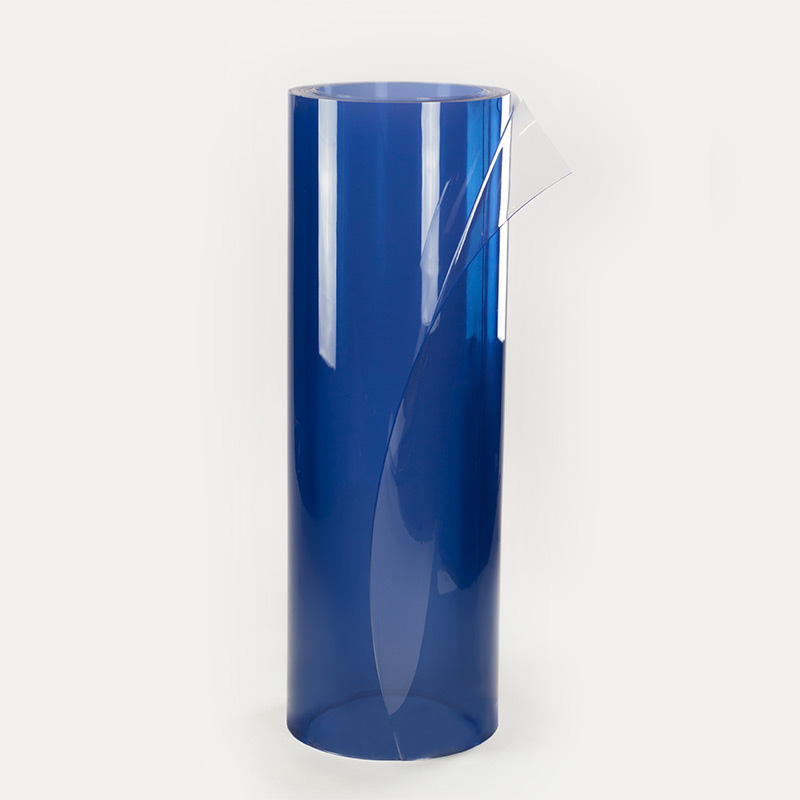
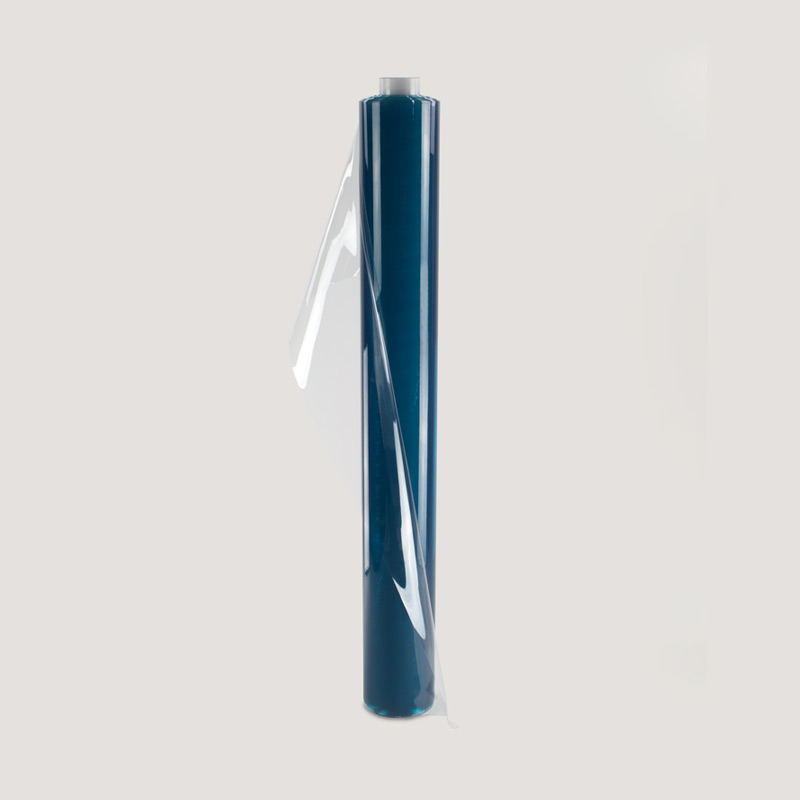

| Transparencia/claridad |

| Flexibilidad |

| Aislamiento térmico |

| Aislamiento acústico |

| Larga durabilidad |

| Resistencia a impactos y arañazos |

| Respetuoso con el medio ambiente y reciclable |
Formatos
- Rollos, tiras, cortinas, paneles y films
- Superficie lisa, acanalada, reforzada, cantos redondeados, mate.
| Mín | Máx | |
| Ancho | 75 mm | 2.2 m |
| Grosor | 0.3 mm | 12 mm |
| Longitud | 20 m | 100 m |
Acerca del PVC semirrígido
El PVC Semirrígido se utiliza como "Vidrio Semirrígido". Ofrece transparencia, brillo y flexibilidad para doblarse o enrollarse.
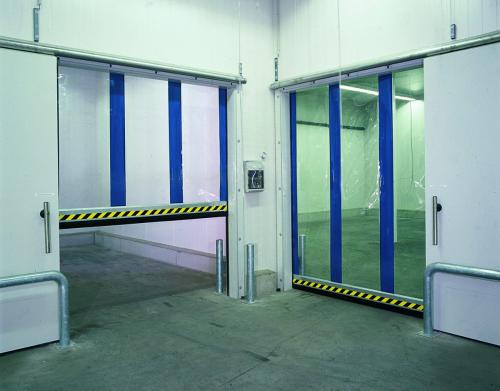
El PVC semirrígido es el más recomendado para lograr ventanas flexibles en puertas enrollables, puertas rápidas, puertas automáticas, paneles semirrígidos para puertas batientes o puertas de láminas en países con climas cálidos.
Aplicaciones

Accesorios

¿Por qué usar PVC Semirrígido?
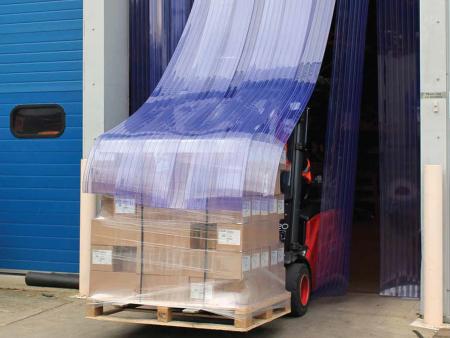
El PVC Semirrígido tiene diversos usos, pero su uso más común es en puertas batientes de PVC, que actúan como barrera aislante térmica en las entradas, permitiendo al mismo tiempo el libre paso de peatones.
Esto suele ocurrir en almacenes o fábricas, donde es esencial que el tráfico circule libremente por las puertas, a la vez que se garantiza que estas estén aisladas para mantener el almacén o la fábrica cálidos y herméticos.
Aplicaciones y beneficios comunes
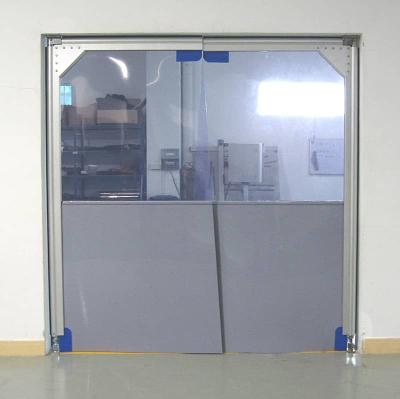
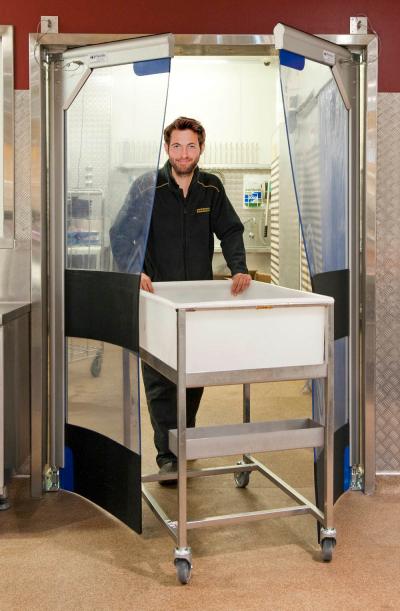
Puertas batientes con PVC Semirrígido:
Las puertas batientes se utilizan comúnmente en entornos de refrigeración, como cámaras frigoríficas y congeladores. Están diseñadas para mantener la integridad del espacio refrigerado, a la vez que facilitan el acceso al personal y a los equipos.
El uso de PVC semirrígido aumenta la rigidez del panel y proporciona una mejor sujeción de la puerta al abrirse.
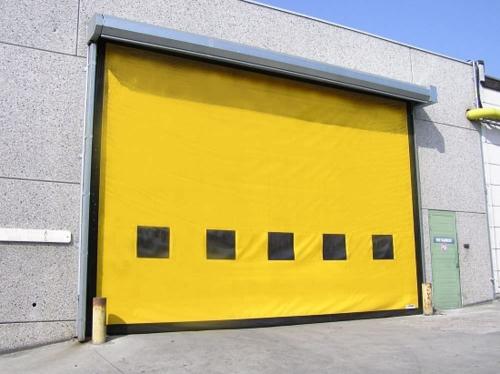
Puertas enrollables de alta velocidad
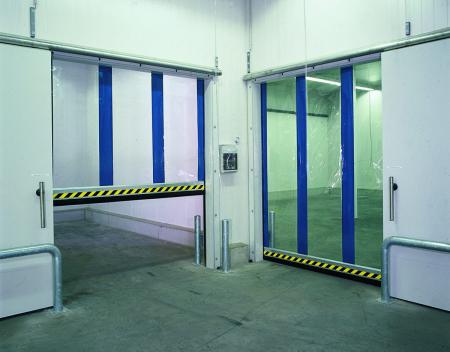
Están diseñadas para un funcionamiento rápido y se utilizan comúnmente en zonas de alto tráfico para mejorar la eficiencia y reducir el intercambio de aire entre diferentes entornos.
Las puertas enrollables rápidas de PVC se utilizan a menudo en salas blancas, áreas de procesamiento de alimentos y lugares donde la higiene es fundamental. Ofrecen fácil limpieza y mantenimiento.
Almacén y muelles de carga
Las tiras de PVC se instalan en las entradas de los almacenes y en las zonas de los muelles de carga para crear barreras que bloquean el polvo, los insectos y los elementos externos, a la vez que facilitan el flujo fluido de mercancías y vehículos. También ayudan a mantener la temperatura interior y a reducir el ruido externo.
El uso de PVC semirrígido se recomienda especialmente cuando la temperatura exterior es alta, ya que el PVC flexible se vuelve demasiado pegajoso debido a la temperatura.
Technical Datasheet
| Properties | Standard | Units | Standard | Description |
| Light transmittance | ASTM D 1003 | % | 85 | Visible light rate transmitted through the material. |
| Shore A hardness | EN ISO 868 | Sh A | 85 to 95 | Index based on a flat indenter's penetration depth. Scale from 0 (Soft) to 100 (Hard). |
| Tearing resistance | DIN 53515 | N/mm | 50 | Minimum tensile stress required to tear a pre-slit sample. |
| Tensile strength at break | ASTM D 638 EN ISO 527 | N/mm² | 16 | Maximum tensile stress that a material can be subjected to before break. |
| Elongation at break | % | 340 | Elongation of the specimen at the break point under tensile stress. | |
| Residual elong. (after break) | % | 68 | Permanent elongation of the specimen measured after rupture in a tensile test. | |
| Thermal conductivity | ASTM C 177 | W/m.K | 0,16 | Ability to conduct heat. The lower it is, the more insulation. |
| Cold bend brittle temp. | ISO 8570 | °C | -35 | Temperature at which the specimen break under torsion stress. Brittle point (CLASH & BERG). |
| Min. usage temp. | EN 1876 | °C | -15 | Temperature range where material keeps its mechanical properties (flexibility). |
| Max. usage temp. | °C | +50 | ||
| Specific heat capacity | ISO 11357 | kJ/kg.K | 1,6 | Heat energy required to increase the temperature of one kilogram of the material by one degree Celsius. |
| Sound reduction | DIN 52210 | dB | >35 | Average sound level (freq. 0,1 to 3,2 kHz) decreased by a 1,76 sq.m. and 5 mm thick PVC curtain. |
| Reaction to fire | EN 13501-1 | Class | - | Standard classifications of material self-extinguishing and resistance to combustion. |
| UV/IR filter | ISO 25980 | - | - | Ability to filter welding rays allowing the use of this material as a welding protection screen. |
| UV resistance | ISO4892 | - | Yes | Ability to resist to UV (Sun, welding arc). |
| Surface resistivity | ASTM D257 | .1010 Ω/□ | - | Material surface electric resistivity measured with a 100 V direct voltage. |
| Water absorption | EN ISO 62 | % | -0,2 | Material mass variation after exposure to humid conditions. (<0 if released / >0 if absorbed) |
| Anti-insect | - | - | - | Special ability to keep insects away.(Food processing plants, tropical regions) |
| Density | ASTM D 792 | g/cm3 | 1,22 | Mass per unit volume. |
A descargar gratis
- FLEXIBLE VINYL - NON-PHTHALATE PLASTICIZER (EN).pdf
- FLEXIBLE VINYL - SOLUTION FOR BUILDING (EN).pdf
- FLEXIBLE VINYL - SOUND REDUCTION (EN).pdf
- FLEXIBLE VINYL - THICKNESS & THERMAL INSULATION (EN).pdf
- FLEXIBLE VINYL - THERMAL INSULATION (EN).pdf
- FLEXIBLE VINYL - STABILIZERS & DURABILITY (EN).pdf
- PLASTIC MATERIALS & EARTH’S ENERGY RESOURCES (EN).pdf
- PLASTIC MATERIALS & GLOBAL WARMING (EN).pdf
- PLASTIC MATERIALS & OIL RESSOURCES (EN).pdf