

Vinyl, a low carbon asset

Generally speaking, polymers are innovative materials with many remarkable characteristics: lightness, mechanical strength, insulating properties, etc…
Compared to other materials, their processing temperature is much lower: 180°C for vinyl versus 1000-1500°C for glass or metals, so they require much less energy both to manufacture and to recycle.
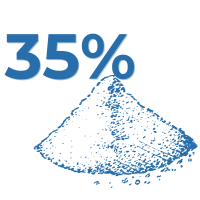
Among the various plastics, flexible vinyl is also characterised by its 35% chlorine content, making it more economical with petrochemical raw materials (PVC resin and plasticisers).
The PVC resin and plasticisers used in our formulations can also be derived from recycled or bio-sourced raw materials.
Finally, flexible vinyl is an excellent thermal insulator, with a thermal conductivity of less than 0.20 W/m°C, and its use as a flexible door or partition offers substantial energy savings.
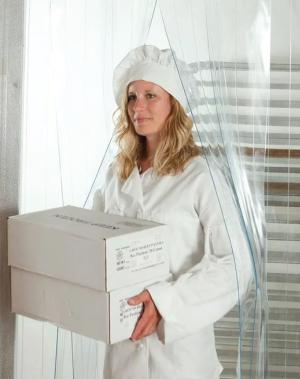
Strip doors in particular, which only open over a limited area when pedestrians or vehicles pass through, result in reduced heat exchange.
Flexible vinyl doors and partitions can be used to insulate hot areas from the cold outside, or conversely, cold rooms from the heat outside.
Our low-carbon advantages

Lower processing temperature |
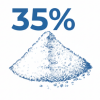
35% of chlorine derived from salt |

Recycled or bio-based material |

Thermal insulation |

|
|
|
|

Energy savings |

Less petrochemical raw materials |
Lower carbon footprint |

Energy savings |